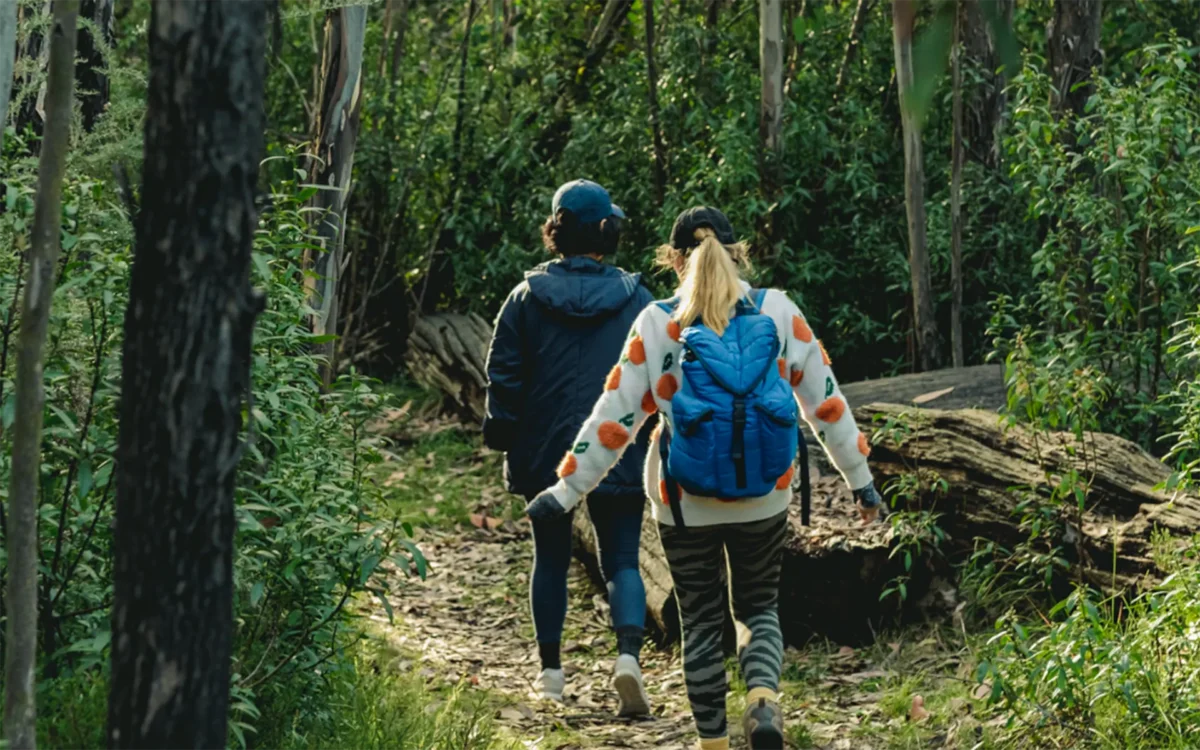
A day hike is an activity that ticks a lot of boxes; you get fresh air, vitamin D, exercise, and if you are hiking at Lake Mountain, plenty of great views! We encourage people to hike and explore nature in summer with friends and family at Lake Mountain; hiking can also be done in winter, just remember to bring a pair of snowshoes and make sure you wear the right gear!
1. Backpack
A backpack is essentially non-negotiable when day hiking. Anywhere between 11–20 litres should be enough to carry everything you need, but feel free to go bigger. Aim to strike the right balance between being large enough to hold the things you need while still being light enough, so you are unencumbered.
Your backpack should feel comfortable, with a strap size that is secure, but not so tight that you lose circulation in your arms during the hike.
2. Weather Appropriate Clothing
It’s always a good idea to check the forecast before hiking, even in the middle of summer. While we don’t need to tell you Melbournites this, it’s always a good idea to be prepared for changing weather. Pack an extra layer and consider the level of protection your clothing will offer from ultraviolet rays.
Your footwear choice is also very important when considering what to wear hiking. Consider the terrain as sneakers or running shoes will be fine on smooth trails. However, if you are tackling rocky, rugged trails, some sturdy hiking boots will offer a greater level of support.
Consider the following as part of your hiking outfit:
- Moisture-wicking undergarments (including t-shirt)
- Quick-drying pants or shorts
- Long-sleeve shirt for sun protection
- Lightweight shell
- Boots or shoes
- A pair of snowshoes in winter
- Synthetic socks
- Spare clothing
Your clothing accessories should also be functional, such as a hat for sun protection or a bandana to help clear any sweat.
3. Food And Water
Let’s be honest; the snacks are a big part of the fun of hiking! From scroggin to energy bars, the food you bring should be nutritious and something you can eat easily while hiking without the need for utensils. A sandwich is an easy way to have something a little more hearty for lunch.
Water is incredibly important, and you should always pack a little more than you need. As a rough guide, a minimum of two litres per person should cover the day, but your age, sweat rate and the length of the hike will be determining factors.
For food and water, be sure to pack:
- Water bottles
- Trail snacks
- Something significant for lunch
- Extra supply
Try to aim for food with little to no packaging, as it is very important that you always take all of your rubbish with you while hiking to protect our stunning environment.
4. Navigation Tools
While we do live in the age of smartphones and Google maps, you may not always have service or much battery life at the end of a long hike. Consider “old school” navigation tools like a map and a compass as a backup just in case technology lets you down.
Some other options to consider could include:
- Route guidebook
- Altimeter watch
- GPS device
- Satellite messenger/beacon
5. First-Aid Kit
You don’t have to go overboard with a day hiking first aid kit. It should be something that can provide a quick fix if an accident happens while out on the trail.
Some items you should consider as part of your day hiking first aid kit can include:
- Medical tape/gauze
- Antibiotic ointment
- Moleskin for blisters
- Ibuprofen
- Benadryl (for allergic reactions)
- A safety pin
- Tweezers
You should also consider carrying some hygiene products as part of your kit or general pack, including hand sanitiser, toilet paper, menstrual products and other care items like sunscreen and insect repellent.
Extra Items
The following are not necessities but may be helpful if you have some spare room in your pack. Consider these day hiking extras:
- Flashlight with extra batteries
- Camera
- A journal
- Binoculars
- Two-way radios
It is always a good idea to carry your ID, mobile phone and some cash. While the point of your day hike may be to get away from these things, they may be useful and will take up very little room.’
If you are someone with sensitive knees, trekking poles, which are essentially a lightweight and sturdy set of sticks, can be very helpful. By creating two more points of contact with the ground, trekking poles will help ease the pressure your knees feel during the hike.
Trekking poles are a personal preference but a very worthy consideration for anyone with chronic knee pain or those less confident on tricky terrain. When choosing trekking poles, look for options with comfortable grips, length adjusters and hand straps. You can even find options that fold away so you can easily put them in your pack when you feel you can go without them.
Water Purification
If you happen across water sources on your trail, you may like to consider a lightweight water purification system to access extra water without having to pre-pack it. Filtering water as you go is more suitable on longer treks but can be done with a purification system or iodine tablets. This means you can carry less water weight while accessing more clean water sources (which can be helpful in an emergency).
While few day hikes are ambitious enough to warrant a water filtration or purification solution, the classic pump-style filter or newer straw filter can be helpful and fun to try.
Lake Mountain offers plenty of great day hiking and bushwalking options nice and close to Melbourne. Our well-marked and well-maintained hiking trails make it easy to explore Victoria’s alpine landscape with spectacular views and plenty of spots to stop for a snack or lunch. Lake Mountain has your summer hiking trails covered, so be sure to visit us with your well-packed hiking backpack the next time you feel like an in-depth stroll.